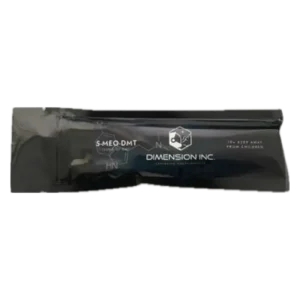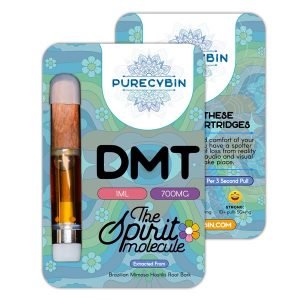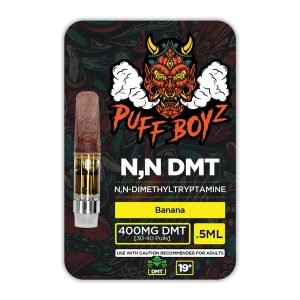
Master Your Experience with the Schwifty Labs NN DMT Cart 1mL | 750mg
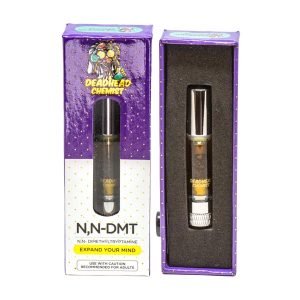
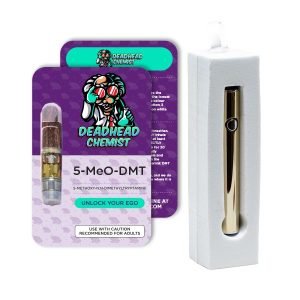
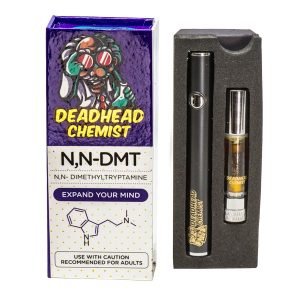
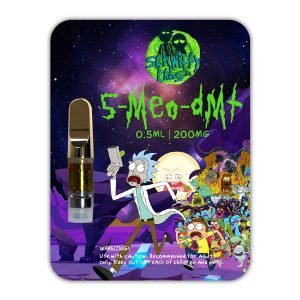
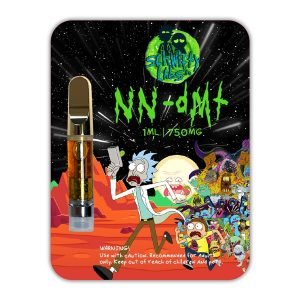
Schwifty Labs NN DMT Cart 1mL is a product name associated with a cartridge marketed as containing N,N-dimethyltryptamine, commonly abbreviated as NN-DMT or simply DMT. From an educational perspective, understanding this type of product involves examining the chemistry of DMT, vaporizer-cartridge technology, analytical uncertainty, potential risks, and the legal framework surrounding controlled psychoactive substances.
N,N-Dimethyltryptamine is a naturally occurring tryptamine compound that has been studied in pharmacological and neuroscience research. DMT interacts with several receptors in the nervous system, including serotonin receptors, and is known for producing significant changes in perception and subjective consciousness. Scientific interest in DMT has increased in recent years as researchers investigate psychedelic compounds and their possible effects on brain function.
The term “cart” generally refers to a cartridge designed for use with an electronic vaporizing device. These cartridges typically contain a liquid formulation that is heated by a device to produce an aerosol for inhalation. However, the presence of a product label does not independently confirm the identity, purity, concentration, or safety of the material inside a particular cartridge.
The 1mL designation generally describes the approximate volume capacity of the cartridge. It does not establish the amount of DMT contained within that volume. Concentration and total active-substance content are separate measurements, and a cartridge’s stated volume alone cannot determine its pharmacological potency.
The abbreviation NN-DMT distinguishes N,N-dimethyltryptamine from other compounds that may also be referred to informally as DMT. Accurate chemical identification is important because different substances can have substantially different pharmacological properties. Without independent laboratory analysis, however, a product label cannot necessarily verify the chemical composition of an individual cartridge.
DMT is associated with intense and rapid psychoactive effects. Individual responses can differ significantly depending on personal sensitivity, psychological state, surrounding circumstances, and interactions with other substances. Combining psychoactive substances may introduce additional risks, while unknown formulations can create further uncertainty.
Vaporized formulations also raise questions about product quality and inhalation exposure. Cartridges from unregulated sources may contain unexpected ingredients, contaminants, or concentrations that differ from their labels. The materials used in the cartridge, heating element, and formulation can also affect what is ultimately inhaled.
For this reason, branding should be distinguished from independently verified product information. The name Schwifty Labs NN DMT Cart 1mL identifies a marketed product, but the name itself cannot establish that the contents match a particular chemical specification. Laboratory analytical methods are required to determine the identity and concentration of substances in an unknown formulation.
Legal considerations are another important part of understanding NN-DMT products. DMT is controlled in many jurisdictions, although specific laws vary by country, state, and region. Regulations may address possession, production, distribution, research, or other activities differently. Anyone researching NN-DMT should therefore consult the laws applicable to their location.
From an educational standpoint, this product can be examined through several areas of study, including psychedelic pharmacology, analytical chemistry, neuroscience, vaporization technology, product quality, and drug policy. These perspectives help separate scientifically established information from branding or unsupported product claims.
Overall, Schwifty Labs NN DMT Cart 1mL is a product name associated with a 1mL cartridge marketed in connection with NN-DMT. Understanding such a product requires attention to chemical identity, formulation, analytical verification, potential risks, and applicable legal restrictions rather than relying solely on product labeling or branding.