Menace Mushroom
Price range: $172.00 through $1,033.00
Menace magic mushrooms were discovered and named after P. Menace, who found them growing on cattle dung on a farm northwest of Houston, Texas.
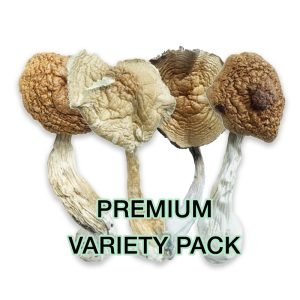
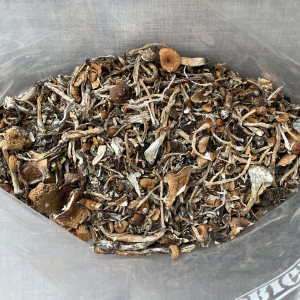
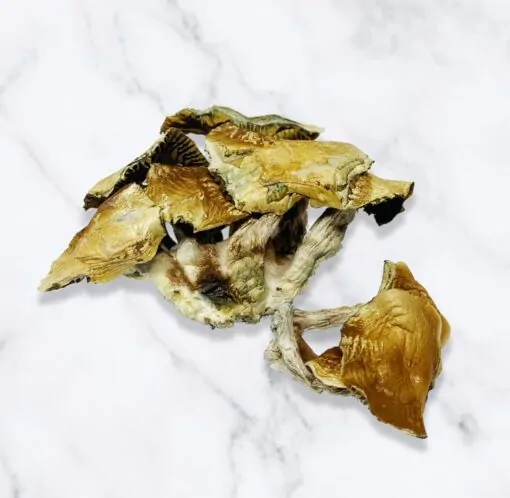
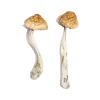
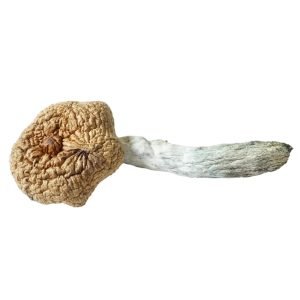
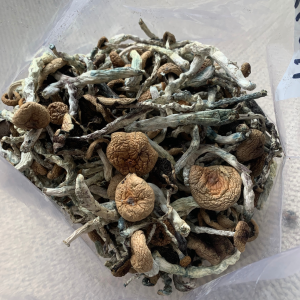
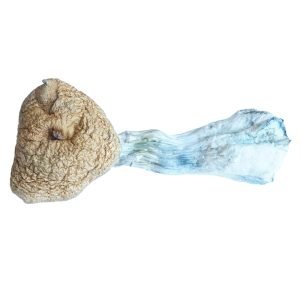
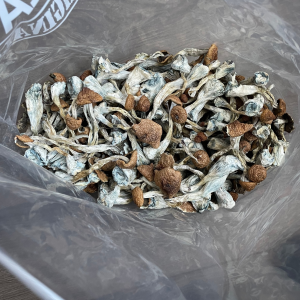
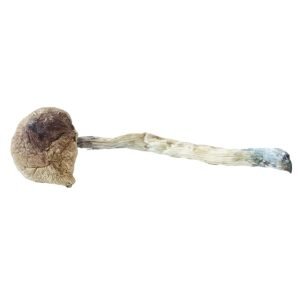
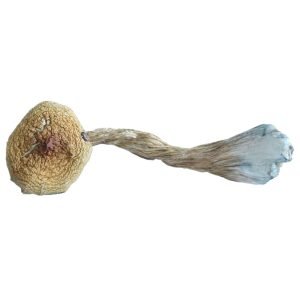
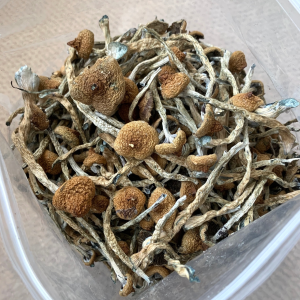
This strain produces large fruiting bodies and caps can range from reddish-brown to tan, often becoming black from spores into maturity, and possesses pale, cylindrical stems (stipes) of moderate thickness.
Known to be a very potent strain that reliably elicits transcendent experiences, effects include intense visual hallucinations and profound insights.
Menace is a name used within mushroom communities for a named variety associated with Psilocybe cubensis. Like many community-recognized varieties of P. cubensis, Menace is generally discussed as a cultivated lineage or variety rather than a separate mushroom species. Its name appears primarily in mushroom-related communities and collections where different cultivated lineages are distinguished by their appearance, history, or reported characteristics.
Psilocybe cubensis is a recognized species belonging to the genus Psilocybe. The species has attracted considerable interest from mycologists because of its geographic distribution, distinctive morphology, genetic diversity, and chemical composition. Over time, numerous named varieties have become familiar within mushroom communities. These names can represent particular lineages, isolates, phenotypes, or community traditions rather than formally recognized taxonomic categories.
The historical background of Menace Mushroom is not as thoroughly documented as the scientific history of Psilocybe cubensis itself. Many named varieties have developed through informal exchange and selective propagation, and their original sources are sometimes difficult to verify. For that reason, claims regarding the precise origin or ancestry of Menace should be treated as community history unless they are supported by reliable scientific documentation.
Descriptions of named P. cubensis varieties can vary significantly. Characteristics such as cap coloration, shape, stem appearance, spore characteristics, and overall morphology may be influenced by genetics, maturity, environmental conditions, and specimen development. Consequently, a particular specimen identified by the Menace name may not always display identical characteristics to every other specimen associated with that name.
From a scientific perspective, the distinction between a species and a cultivated variety is important. Psilocybe cubensis represents the biological species, while Menace functions as a community-associated name used to distinguish a particular lineage or phenotype. This terminology is common throughout mushroom culture, where growers and researchers may use names to track different genetic or morphological groups.
Menace is therefore an interesting subject for people studying fungal taxonomy and the development of cultivated mushroom varieties. Research into P. cubensis can involve areas such as fungal genetics, morphology, spore characteristics, population diversity, and the influence of environmental conditions on phenotype. These areas help explain why mushrooms belonging to the same species can display noticeable differences.
Another important consideration is that community descriptions are not always standardized. Two sources may describe the same named variety differently, particularly when the variety has been propagated through multiple generations or exchanged between different collections. A careful approach is therefore to distinguish documented scientific information from anecdotal descriptions and historical claims.
The name Menace Mushroom should also be understood within the wider context of Psilocybe cubensis research. The species contains naturally occurring psychoactive compounds, making it the subject of scientific, legal, and public-health discussion. Laws relating to Psilocybe mushrooms and associated materials differ substantially depending on jurisdiction.
For educational research, Menace provides an example of how modern mushroom communities create and preserve variety names outside formal biological taxonomy. Studying these names can reveal interesting connections between fungal genetics, cultivation history, morphology, and online mycology culture.
Overall, Menace is best understood as a community-associated Psilocybe cubensis variety rather than a separate species. Its naming history, reported characteristics, and place within mushroom culture make it an interesting topic for educational mycology research and for understanding the diversity of cultivated P. cubensis lineages.
| Variations | Half pounds, Oz, Pounds, Quarter pounds |
|---|
Related products
Dried Magic Mushrooms
Dried Magic Mushrooms
Dried Magic Mushrooms
Dried Magic Mushrooms
Dried Magic Mushrooms
Dried Magic Mushrooms
Dried Magic Mushrooms